
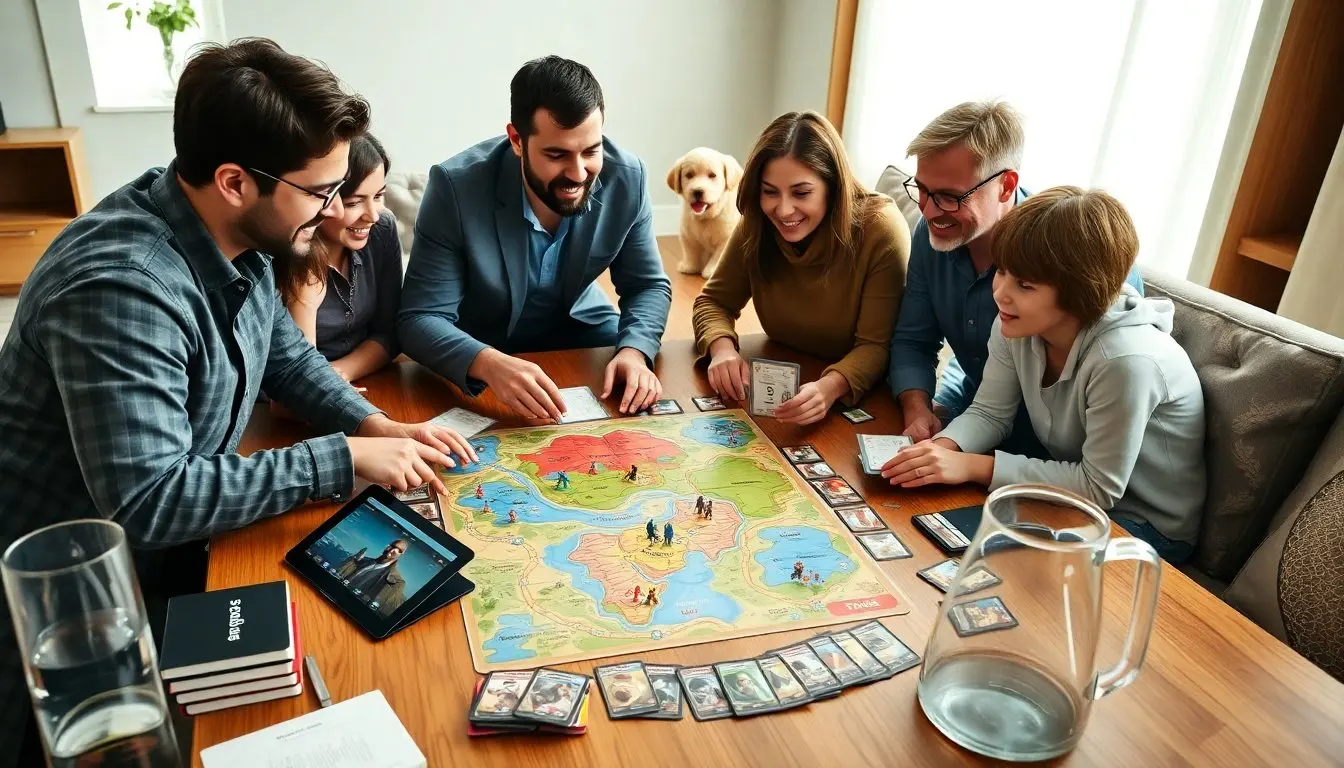
best co op board games remain the easiest way to build group fun and shared challenge. This guide lists top picks and shows how groups pick the right game. It covers easy family titles, deep campaign games, and clear criteria for players, time, and difficulty.
Key Takeaways
- The best co op board games balance clear rules, shared objectives, and player engagement for easy learning and fun.
- Family-friendly co-op games like Pandemic and Forbidden Island offer quick setup and encourage teamwork without complex bookkeeping.
- Experienced players benefit from deep campaign co-op games like Gloomhaven and Spirit Island, which demand strategy and multi-session commitment.
- Choosing the right cooperative board game involves considering player count, time availability, difficulty, roles, theme, and replay value.
- Testing games before purchase via demos or videos helps ensure the best co op board games match the group’s preferences and maintain long-term interest.
- Mixing light and deep co-op games allows groups to balance between casual play and challenging, rewarding experiences.
Top Quick Picks — Great Co-Op Games For Beginners And Family Play
Family groups often want the best co op board games that they can learn in one evening. They want clear rules, short setup, and a strong shared goal. They choose a game that balances luck and choice so every player feels useful.
Pandemic remains a staple. It asks players to treat outbreaks, share cards, and plan moves. The rules read fast. The game forces teamwork and gives clear feedback on success and failure. Families like the tension without heavy bookkeeping.
Forbidden Island and Forbidden Desert offer fast sessions and tight decisions. Players must move, trade, and rescue. The games scale well for new players. They also teach the value of planning and sacrifice in a few rounds.
Mysterium gives a cooperative twist to deduction. One player gives visual clues while the others guess. The game rewards imagination and simple discussion. It works well for mixed-age groups.
Just One provides a short, social co-op option for casual nights. Players aim to guess a secret word using one-word clues from others. The pace stays lively and the setup takes seconds.
For families with children, Outfoxed. and Hoot Owl Hoot. give cooperative play with age-appropriate content. They use simple mechanics and bright components. Kids learn to share roles and to discuss plans.
Groups that want a quick puzzle can try The Mind. It asks players to play cards in ascending order without talking. The game builds silent trust and short rounds. It fits well into a game night before moving to heavier titles.
These picks give groups a reliable starting point. They show how the best co op board games can match different energy levels and play experience. New groups can pick one from this list and start playing within minutes.
Deep Strategy And Campaign Co-Op Games For Experienced Groups
Experienced groups often look for the best co op board games that offer long-term campaigns and deep choices. They want systems that reward planning, adaptation, and role growth. They accept longer play and setup for richer narratives.
Gloomhaven presents a substantial campaign where players grow characters and unlock scenarios. The game combines tactical combat with a branching story. It asks players to commit time and to coordinate tactics across multiple sessions.
Mage Knight blends deck building and exploration with tough combat. Players choose actions and manage resources in a detailed world. The game rewards careful sequencing and offers satisfying tension in every turn.
Arkham Horror: The Card Game gives a campaign-driven investigation experience. Players build decks, pursue clues, and face consequences that carry between sessions. The narrative stakes make each choice feel important.
Spirit Island flips the usual formula. Players act as spirits who defend an island from invaders. The game demands coordination and role specialization. It scales in difficulty and rewards players who plan multi-turn strategies.
Aeon’s End removes the common shuffle and forces players to manage a persistent deck. The game emphasizes timing and shared responsibilities. It challenges groups to apportion roles and to execute synchronized tactics.
Time Stories focuses on story-driven scenarios with limited replay without components, but with strong narrative hooks. Players work together to solve time loops and to optimize runs. The game pushes groups to communicate and to learn from failure.
These deep titles show how the best co op board games can offer rich progression and satisfying long-term play. Experienced groups often rotate between a campaign title and a light pick to balance time and energy.
How To Choose The Right Co-Op Game For Your Group (Players, Time, Difficulty)
A clear process helps groups pick the best co op board games for their needs. They should check three simple factors: player count, time budget, and difficulty.
First, they verify player count. Publishers list a player range. Groups avoid games that sit at the low or high end of that range for best balance. If they plan variable group sizes, they pick a game with flexible scaling.
Second, they match time. Players pick a game with average play time that fits the night. Short games under an hour work for casual nights. Long campaigns require multi-session commitments. They prefer a mix if the group plays irregularly.
Third, they test difficulty. Games usually list a difficulty level or show complexity through components and rule length. Groups start with medium or easy difficulty if they value social play. They pick hard games when they want a strong challenge and can accept repeated losses.
Fourth, they assign roles. Cooperative titles often separate tasks by role. They choose games that offer interesting roles for each player. Balanced roles keep quieter players engaged and let leaders focus on planning.
Fifth, they consider learning curve and theme. A clear theme helps new players understand goals. But rules clarity matters more than theme. They read a rules summary or watch a short tutorial before buying.
Sixth, they factor replay value. Games with modular setups, scenario decks, or random elements last longer. They prefer titles with varying outcomes to keep the group returning.
Finally, they test before they buy. Many groups borrow games, use demo nights, or watch full-play videos. A short trial shows whether the group enjoys the pacing, decision weight, and social flow.
Applying these checks helps groups find the best co op board games that fit their time, size, and taste. They make smarter purchases and avoid games that sit on the shelf.